The standardized products or those manufactured specifically in accordance with customer requirements are used in all areas of industry, the chemical and petrochemical sectors, plant engineering, heat supply, and cryogenics.
Hatec Flex therefore manufactures expansion joints and expansion joint systems for the following applications:
Applicable standards for the design and calculation of expansion joints:
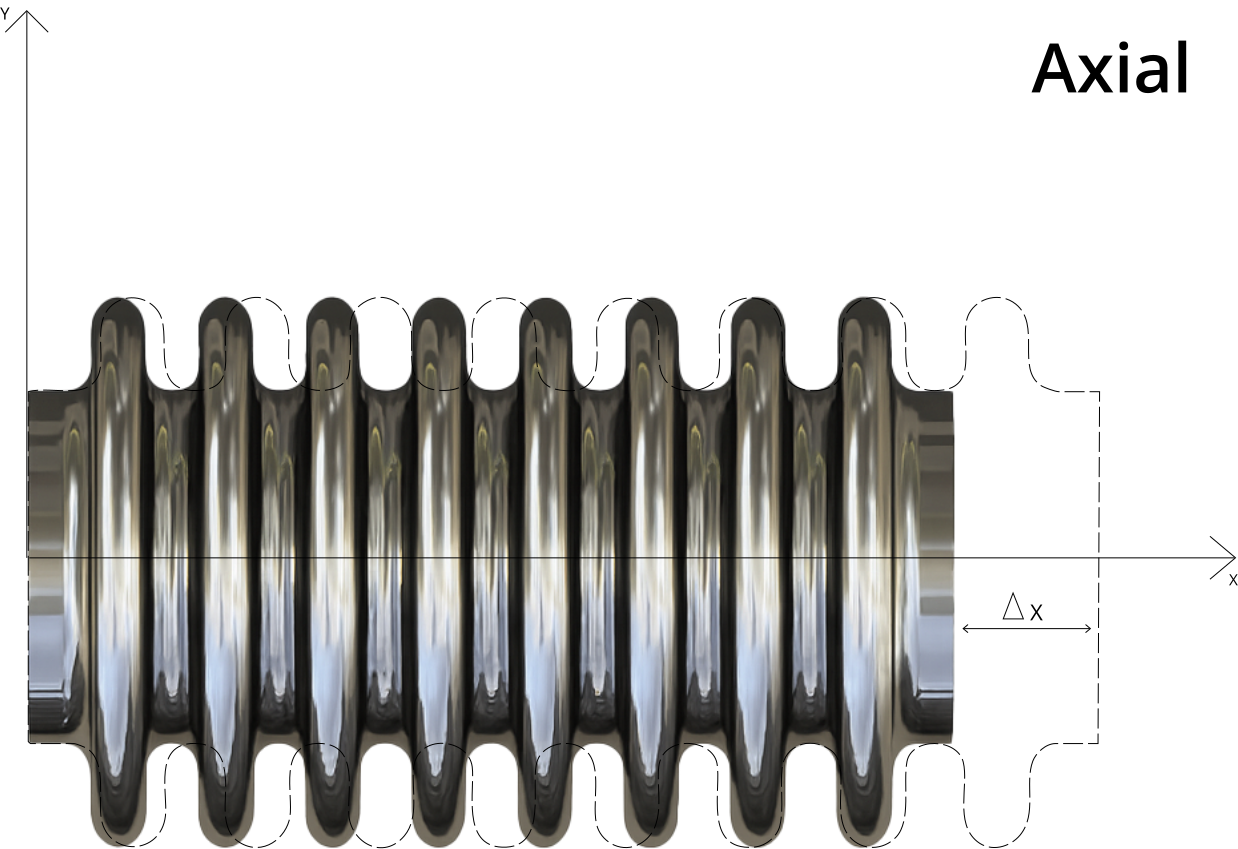
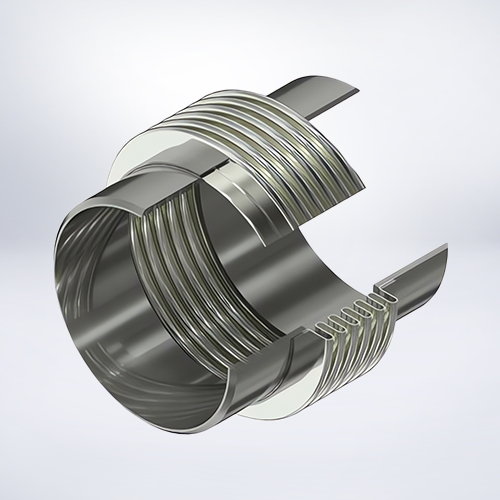

Axial expansion joints are suitable for the compensation of axial expansion in straight pipework sections. For example, they are used in the following:
• Compensation of thermal expansion in straight pipework sections
• In tank and apparatus construction for the compensation of occurring differential expansions.
• As end expansion joints for sleeve pipes in district heating systems
• In exhaust pipelines on boilers and engines for thermal expansion and vibrations
• As expansion joints on pumps, valves, and plate heat exchangers (with or without tie‑rod restraint)
• For gas-tight wall penetrations of pipework in reactor construction and shipbuilding
The prerequisite for the use of expansion joints without tie‑rod restraint is the presence of appropriate fixed points and pipe guides.
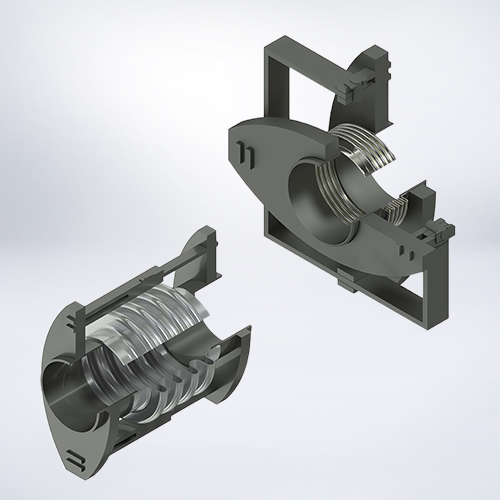
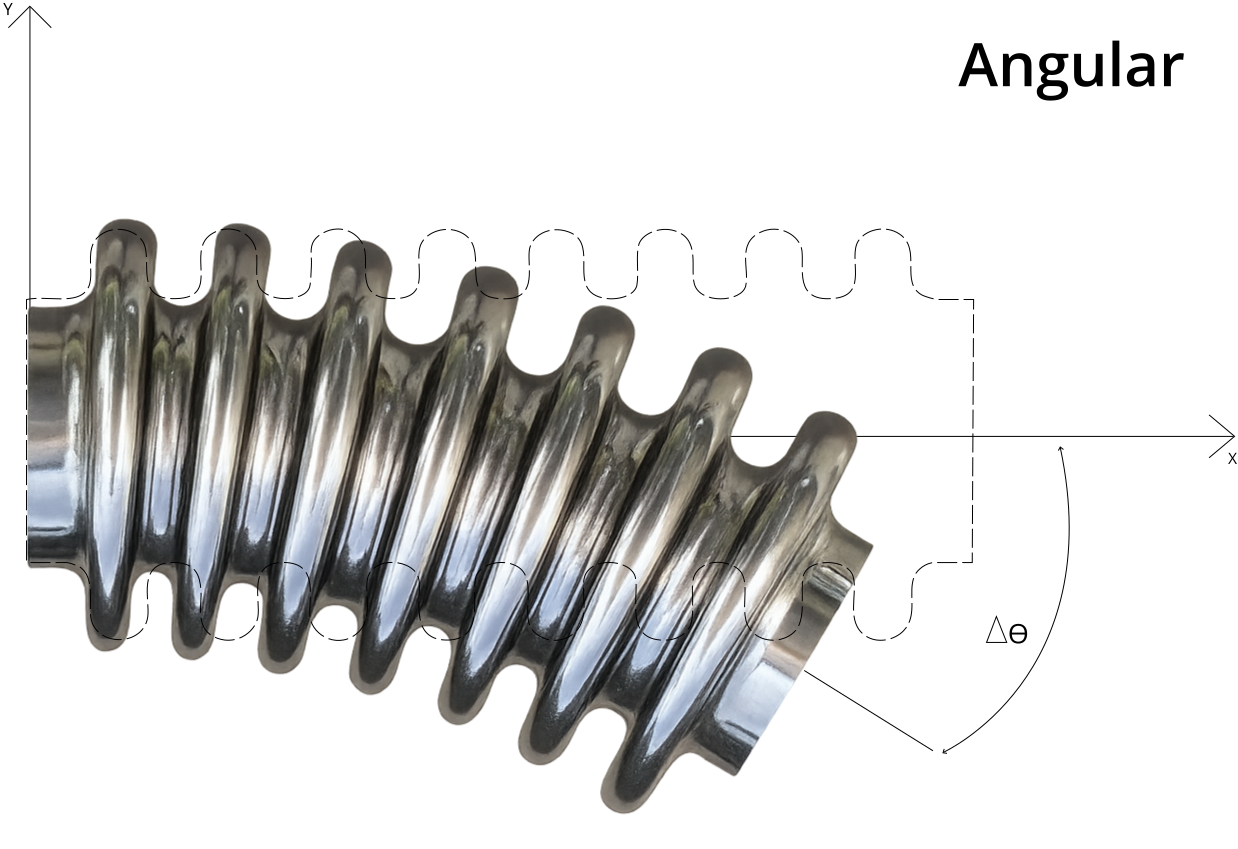
By means of the angular movements of the steel bellows, angular and cardanic expansion joints are suitable for the absorption of expansion that occurs perpendicular (laterally) in a plane or in a circular plane to the longitudinal axis of the expansion joints. The technical specifications are decisive for the use.
Angular and cardanic expansion joints are suitable for both the compensation of long pipe sections in transmission pipelines as well as short-span boilers and engine room piping for planar and spatial pipework systems.
At least two and at most three angular expansion joints, or two gimbal expansion joints, possibly in conjunction with an angular expansion joint, form a statically determinate 3-joint system.
Three cardanic expansion joints are not permitted in a single system.
The necessary arrangement of the expansion joints for the respective movement absorption of the joint system is performed in accordance with the specifications of Hatec Engineering, or corresponding static calculations. We also refer to Annex C of DIN EN 14917.
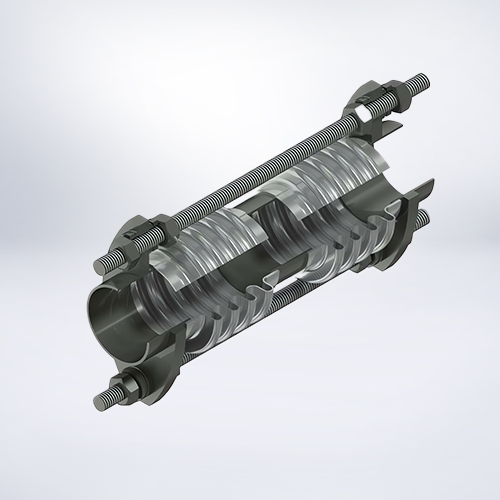
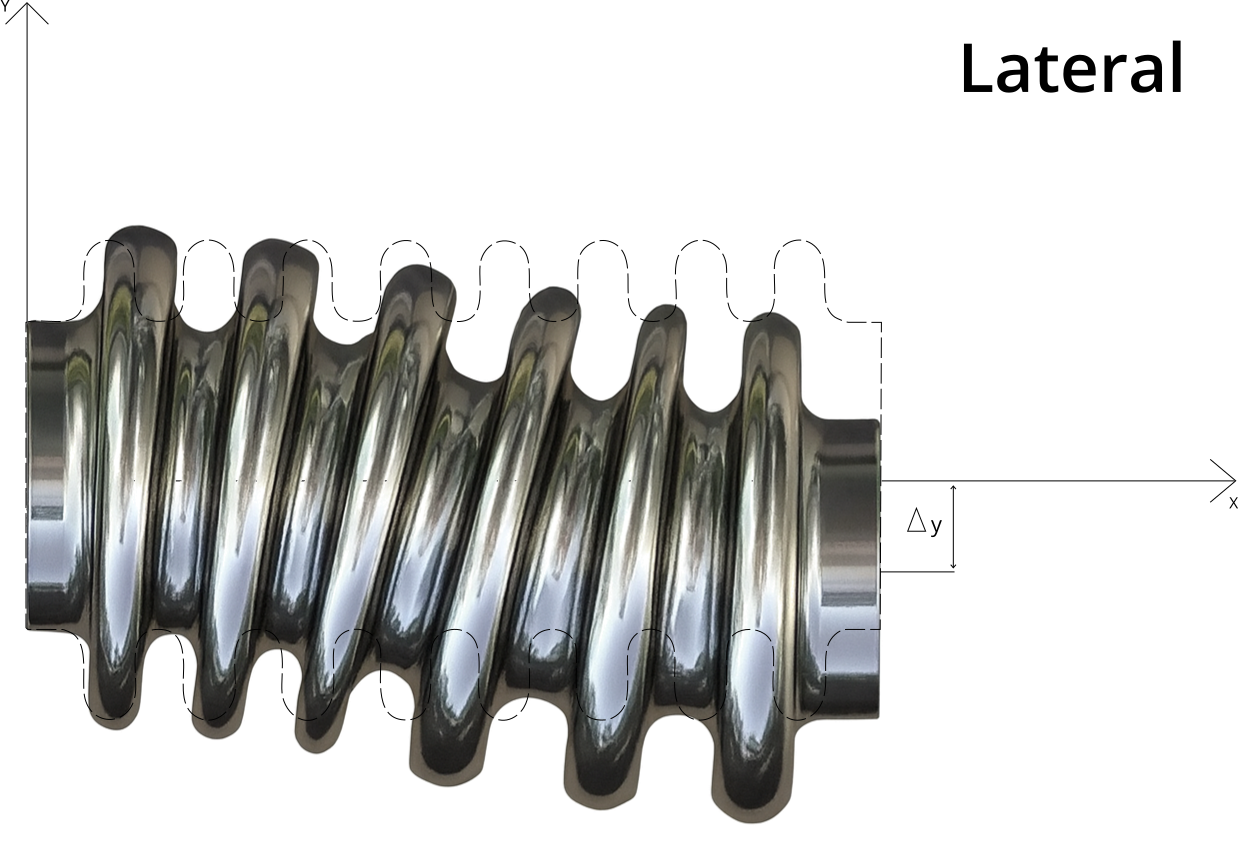
The operating principle of lateral expansion joints, such as that of angular expansion joints, is based on the angular movements of the steel bellows. They are also suitable for confined installation conditions. The expansion capacity depends on the overall length or the center-to-center distance of the bellows: The greater the center-to-center distance of the bellows, the greater the lateral expansion capacity.
The adjustment force of the expansion joint is reduced as a result of a larger center-to-center distance of the bellows.
The lateral expansion joint is an independent expansion unit that represents a complete two-joint system.
When used in combination with a further angular expansion joint as a joint system, the arrangement of the expansion joints required for the respective movement absorption of the joint system is performed in accordance with the specifications of Hatec Engineering or corresponding static calculations.
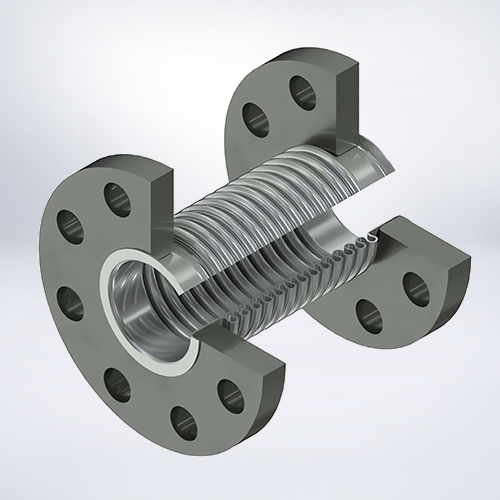
• For vibration damping and structure-borne noise reduction on pumps and compressors
• For the absorption of very small axial and lateral expansions
• For the reduction of stresses, forces, and torque at connection points
The prerequisite for the use of vibration dampers with and without restraint is the presence of appropriate pipe-side guides or fixed points in accordance with DIN EN 14917, Annex C, Section 3.2.
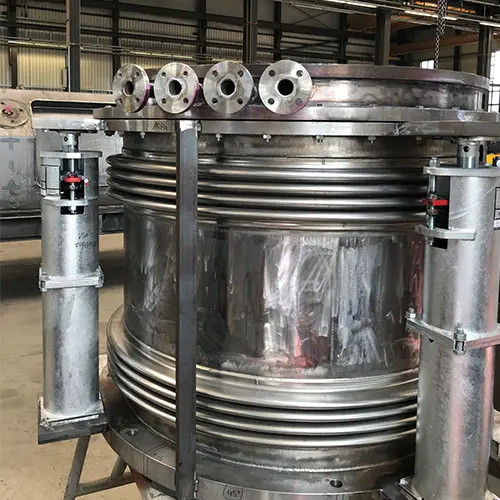
• Pressure-relieved expansion joints
• Corner-relieved expansion joints
• Externally pressure-loaded bellows (for large movement absorption)
• Extension sections
• Rectangular expansion joints
• Guide and protective pipes
• Lifting and torsion protection
• Leakage monitoring
• Internal insulation
• Abrasion or fire-resistant lining